Tonthowi Al Ahyar
Designing at the intersection of technical feasibility and business growth through intuitive, high-impact user experience.


Selected Portfolio
Simplifying wellness tests for improved accuracy
HealthTech
iOS & Android App
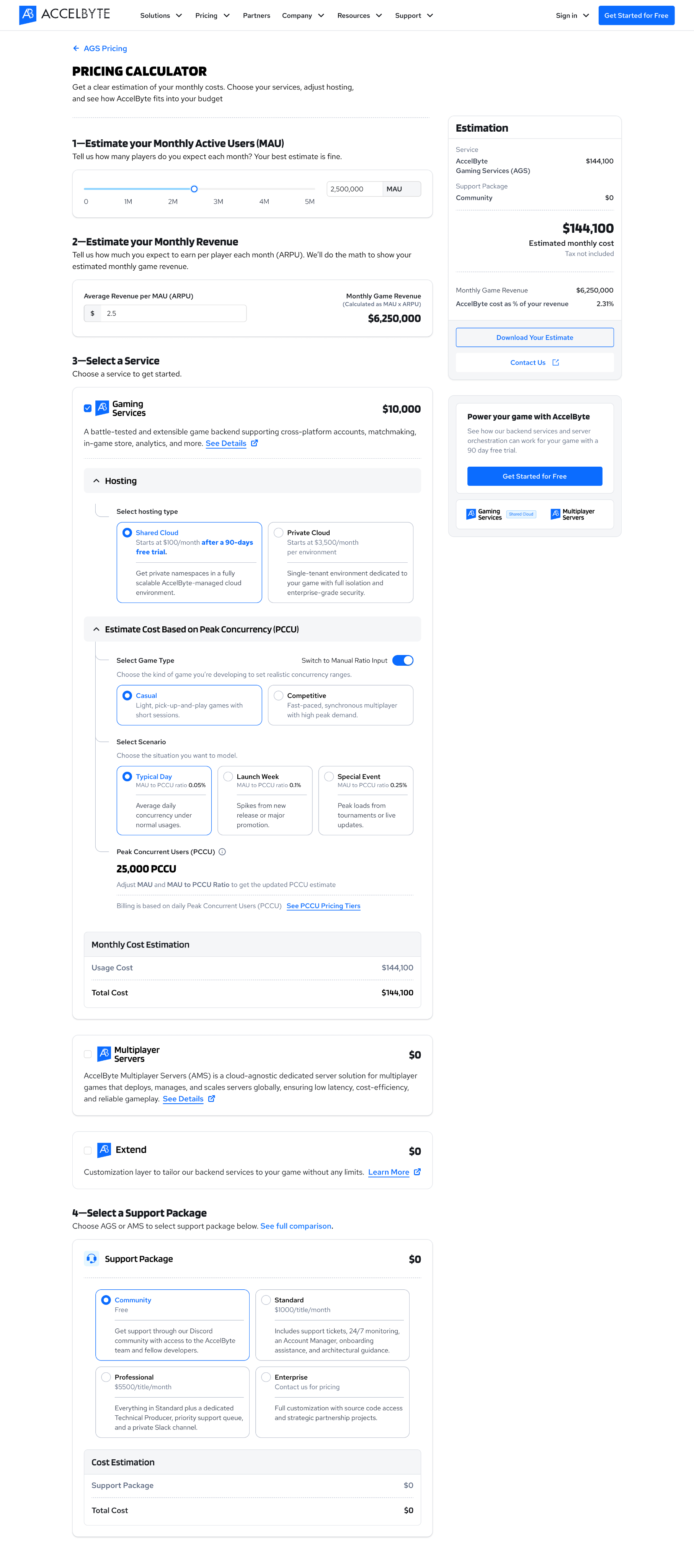
Making sense scary-high cost estimates into transparent forecast
Cloud-Based Gaming SaaS
Website
Redesigning linear onboarding into interactive exploration
Game Tools
DnD Mapmaking
Eliminating friction in client login management
Cloud-Based Gaming SaaS
Web Application
Payment service app landing page designed in Framer ↗
Framer
Landing Page
Personal Project
Designed multi-step, conditional booking form in Webflow ↗
Webflow
Website



What it's like to work together

Nik Adzic, Perfeqt CEO
⭐️ ⭐️ ⭐️ ⭐️ ⭐️
“Towi is a great designer. He’s been working with us since the beginning. He possesses a sharp and detailed eye for design.”

Zuleyka Strasner, ZuVision CEO
⭐️ ⭐️ ⭐️ ⭐️ ⭐️
“It’s a great pleasure working with you, T! You’re translating my mind and articulating it even better through the design! Great work!”

Tanzim Khan, The Master Forge LLC
⭐️ ⭐️ ⭐️ ⭐️ ⭐️
“Towi has a strong understanding of our application, and I’m very happy with the progress. In the coming phase, we can work on more advanced UX/UI”
Design Process
Working with many clients, companies, and businesses has shaped me to be better designer by not only care about the products I designed, but also to listen and collaborate rather than just tweaking pixels.
1—Finding the problem
✦ Listen to Users — through interviews, surveys, or analyze feedbacks.
✦ Success Needs to be Measurable — whether it’s smoother user engagement, less friction, or higher conversions.
✦ Align with the Big Picture — talk with stakeholders, does the measurable goals make sense?
2—Does the problem is really a problem?
✦ Ask the Right Questions — Is this a real pain in the ass or just a minor inconvenience? How often does it occur, and how many users does it affect?
✦ Get User Feedback — Sometimes, what seems like a problem might not matter to users. Listening to them helps separate assumptions from reality.
3—Solution Hypothesis
✦ Propose a Testable Idea — Frame the hypothesis like: “If we do X, users will complete XX% faster”.
✦ Prototype and Test — Build a quick prototype to validate the hypothesis through user testing or A/B experiments.
4—Prototype and Validate
✦ Iterate Rapidly — Make quick adjustments based on informal feedback before moving to more formal testing.
✦ Real Users, Real Scenarios — Observe target users interacting with the prototype to identify friction points and validate usability.
✦ Actionable Insights — Measure task success rates, time taken, and user satisfaction from usability tests and refine the solution.
5—Final Design
✦ Collaborative Feedback — Share the final design with developers, stakeholders, and other team members to address feasibility, functionality, and business alignment.
6—Development
✦ Design Consistency Checks — Ensure the implemented design aligns with the style guide.
✦ Functionality Testing — Verify that interactive elements work as intended and provide a smooth user experience.
✦ Proactive Problem-Solving — Anticipate questions by providing detailed documentation, assets, and design rationale upfront.
✦ Bug Reporting — Identify and document any issues for developers to address during the process.
✦ Collaborative Communication— Stay accessible to developers for any clarifications or adjustments.
7—Metrics Analysis
✦ Compare Before and After — Use key performance indicators (KPIs) to evaluate improvements.
✦ Measure the Hypothesis — Analyze data to see if the design achieved the intended goals (e.g., higher task completion, reduced friction).

Driving revenue through strategic design, not price cuts.
I am available for an online conversation at your convenience to explore potential roles and how I can add value to your organization.
Tonthowi Al Ahyar
Designing at the intersection of technical feasibility and business growth through intuitive, high-impact user experience.
Selected Portfolio
Simplifying wellness tests for improved accuracy
HealthTech
iOS & Android App
Making sense scary-high cost estimates into transparent forecast
Cloud-Based Gaming SaaS
Website
Redesigning linear onboarding into interactive exploration
Game Tools
DnD Mapmaking
Eliminating friction in client login management
Cloud-Based Gaming SaaS
Web Application
Payment service app landing page designed in Framer ↗
Framer
Landing Page
Personal Project
Designed multi-step, conditional booking form in Webflow ↗
Webflow
Website





What it's like to work together
Nik Adzic, Perfeqt CEO
⭐️ ⭐️ ⭐️ ⭐️ ⭐️
“Towi is a great designer. He’s been working with us since the beginning. He possesses a sharp and detailed eye for design.”
Zuleyka Strasner, ZuVision CEO
⭐️ ⭐️ ⭐️ ⭐️ ⭐️
“It’s a great pleasure working with you, T! You’re translating my mind and articulating it even better through the design! Great work!”
Tanzim Khan, The Master Forge LLC
⭐️ ⭐️ ⭐️ ⭐️ ⭐️
“Towi has a strong understanding of our application, and I’m very happy with the progress. In the coming phase, we can work on more advanced UX/UI”
Design Process
Working with many clients, companies, and businesses has shaped me to be better designer by not only care about the products I designed, but also to listen and collaborate rather than just tweaking pixels.
1—Finding the problem
✦ Listen to Users — through interviews, surveys, or analyze feedbacks.
✦ Success Needs to be Measurable — whether it’s smoother user engagement, less friction, or higher conversions.
✦ Align with the Big Picture — talk with stakeholders, does the measurable goals make sense?
2—Does the problem is really a problem?
✦ Ask the Right Questions — Is this a real pain in the ass or just a minor inconvenience? How often does it occur, and how many users does it affect?
✦ Get User Feedback — Sometimes, what seems like a problem might not matter to users. Listening to them helps separate assumptions from reality.
3—Solution Hypothesis
✦ Propose a Testable Idea — Frame the hypothesis like: “If we do X, users will complete XX% faster”.
✦ Prototype and Test — Build a quick prototype to validate the hypothesis through user testing or A/B experiments.
4—Prototype and Validate
✦ Iterate Rapidly — Make quick adjustments based on informal feedback before moving to more formal testing.
✦ Real Users, Real Scenarios — Observe target users interacting with the prototype to identify friction points and validate usability.
✦ Actionable Insights — Measure task success rates, time taken, and user satisfaction from usability tests and refine the solution.
5—Final Design
✦ Collaborative Feedback — Share the final design with developers, stakeholders, and other team members to address feasibility, functionality, and business alignment.
6—Development
✦ Design Consistency Checks — Ensure the implemented design aligns with the style guide.
✦ Functionality Testing — Verify that interactive elements work as intended and provide a smooth user experience.
✦ Proactive Problem-Solving — Anticipate questions by providing detailed documentation, assets, and design rationale upfront.
✦ Bug Reporting — Identify and document any issues for developers to address during the process.
✦ Collaborative Communication— Stay accessible to developers for any clarifications or adjustments.
7—Metrics Analysis
✦ Compare Before and After — Use key performance indicators (KPIs) to evaluate improvements.
✦ Measure the Hypothesis — Analyze data to see if the design achieved the intended goals (e.g., higher task completion, reduced friction).
Driving revenue through strategic design, not price cuts.
I am available for an online conversation at your convenience to explore potential roles and how I can add value to your organization.
Tonthowi Al Ahyar
Designing at the intersection of technical feasibility and business growth through intuitive, high-impact user experience.
Selected Portfolio
Simplifying wellness tests for improved accuracy
HealthTech
iOS & Android App
Making sense scary-high cost estimates into transparent forecast
Cloud-Based Gaming SaaS
Website
Redesigning linear onboarding into interactive exploration
Game Tools
DnD Mapmaking
Eliminating friction in client login management
Cloud-Based Gaming SaaS
Web Application
Payment service app landing page designed in Framer ↗
Framer
Landing Page
Personal Project
Designed multi-step, conditional booking form in Webflow ↗
Webflow
Website
Companies




What it's like to work together
Nik Adzic, Perfeqt CEO
⭐️ ⭐️ ⭐️ ⭐️ ⭐️
“Towi is a great designer. He’s been working with us since the beginning. He possesses a sharp and detailed eye for design.”
Zuleyka Strasner, ZuVision CEO
⭐️ ⭐️ ⭐️ ⭐️ ⭐️
“It’s a great pleasure working with you, T! You’re translating my mind and articulating it even better through the design! Great work!”
Tanzim Khan, The Master Forge LLC
⭐️ ⭐️ ⭐️ ⭐️ ⭐️
“Towi has a strong understanding of our application, and I’m very happy with the progress. In the coming phase, we can work on more advanced UX/UI”
Design Process
Working with many clients, companies, and businesses has shaped me to be better designer by not only care about the products I designed, but also to listen and collaborate rather than just tweaking pixels.
1—Finding the problem
✦ Listen to Users — through interviews, surveys, or analyze feedbacks.
✦ Success Needs to be Measurable — whether it’s smoother user engagement, less friction, or higher conversions.
✦ Align with the Big Picture — talk with stakeholders, does the measurable goals make sense?
2—Does the problem is really a problem?
✦ Ask the Right Questions — Is this a real pain in the ass or just a minor inconvenience? How often does it occur, and how many users does it affect?
✦ Get User Feedback — Sometimes, what seems like a problem might not matter to users. Listening to them helps separate assumptions from reality.
3—Solution Hypothesis
✦ Propose a Testable Idea — Frame the hypothesis like: “If we do X, users will complete XX% faster”.
✦ Prototype and Test — Build a quick prototype to validate the hypothesis through user testing or A/B experiments.
4—Prototype and Validate
✦ Iterate Rapidly — Make quick adjustments based on informal feedback before moving to more formal testing.
✦ Real Users, Real Scenarios — Observe target users interacting with the prototype to identify friction points and validate usability.
✦ Actionable Insights — Measure task success rates, time taken, and user satisfaction from usability tests and refine the solution.
5—Final Design
✦ Collaborative Feedback — Share the final design with developers, stakeholders, and other team members to address feasibility, functionality, and business alignment.
6—Development
✦ Design Consistency Checks — Ensure the implemented design aligns with the style guide.
✦ Functionality Testing — Verify that interactive elements work as intended and provide a smooth user experience.
✦ Proactive Problem-Solving — Anticipate questions by providing detailed documentation, assets, and design rationale upfront.
✦ Bug Reporting — Identify and document any issues for developers to address during the process.
✦ Collaborative Communication— Stay accessible to developers for any clarifications or adjustments.
7—Metrics Analysis
✦ Compare Before and After — Use key performance indicators (KPIs) to evaluate improvements.
✦ Measure the Hypothesis — Analyze data to see if the design achieved the intended goals (e.g., higher task completion, reduced friction).
Driving revenue through strategic design, not price cuts.
I am available for an online conversation at your convenience to explore potential roles and how I can add value to your organization.